Partnership Microschools
Shared mission. Shared resources. The Center stands with you.
Partnership microschools are built through collaboration. A host partner brings the assets. A technical partner brings the educational expertise. Together, they create a microschool designed to serve a community with intention and care.
The host partner provides what they already have. Space. Infrastructure. A built-in community. This model is especially powerful for forward-thinking municipalities, employers expanding benefits for their workforce, associations adding value for members, and houses of worship reimagining how they serve families.
The technical partner leads the teaching and learning. Often a local nonprofit or experienced education organization, they design and operate the microschool itself, shaping the learning model, culture, and day-to-day experience.
You bring the mission.
You bring the resources.
You bring the community.
We help you turn it into a school.
The Center works alongside both partners, helping host organizations clarify their assets and priorities while supporting technical partners in building the microschool itself. From instructional design and staffing to culture, assessment, and day-to-day operations, we help ensure the teaching and learning model is deeply aligned with the host partner’s mission and the community it serves. No guesswork. No forced models. Just grounded support, research, and guidance every step of the way.
Build it together.
We’re in your corner.

.jpg?width=2000&name=IMG_5617%20(2).jpg)
Trusted by over 2,000 microschools nationwide.
The Center supports founders and partners who are building something different and want guidance that respects that difference. Our approach is research-driven, field-tested, and founder-first. We work side by side with partners across the country to help turn bold ideas into sustainable microschools—without sacrificing autonomy or intent.
-
Guidance
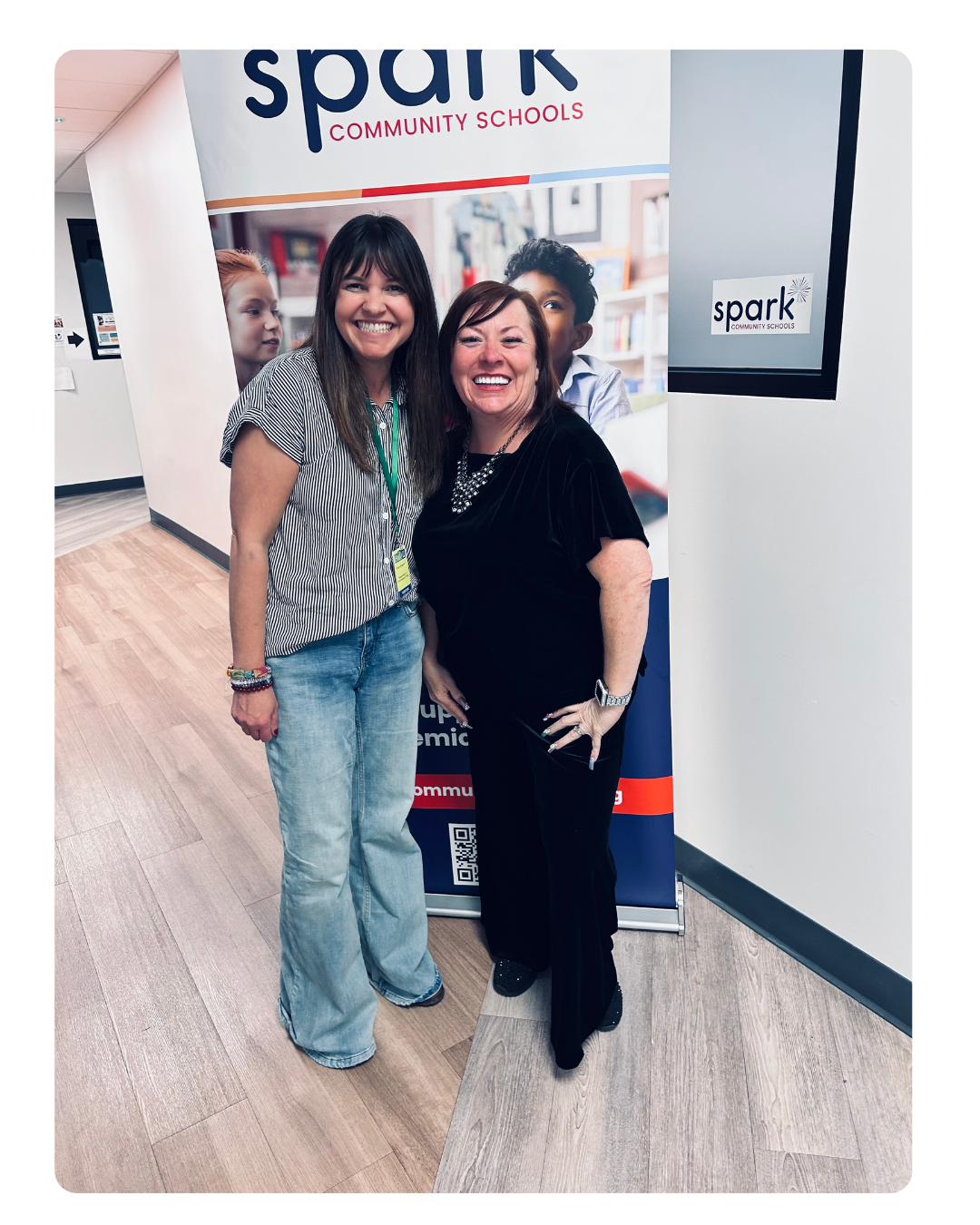
The Center team are people who’ve done the work. Our microschool support team is made up entirely of microschool founders, including the Center’s own founders, Don and Ashley Soifer, who created the nation’s first ever public–private partnership microschool. The guidance you get from the Center is practical, informed, and shaped by real experience in the field. Our partnership field coordinator, Darla Baquedano, also has first-hand experience in creating partnership microschools and helps both the host and technical partners in building a microschool that's rooted in the community.
-
Trainings
Running a microschool takes more than vision. The Center offers trainings for founders and their teams, covering the unglamorous, essential, and game-changing stuff: operations, instruction, culture, marketing, and family communication. Through the National Microschooling Center Training Institute, we offer both live and on-demand learning, and in a growing number of states, those hours count toward teacher licensure requirements. This is professional development built for the future, not borrowed from the past.
The Center also offer one-on-one trainings for host partners, working with them to identify their needs and create a mission-aligned microschool.
-
Community
A single Center membership unlocks nationwide community for your entire team, giving you access to learning tools, focused cohorts, and real conversations with people who actually get this work. Our members-only space is built to be safe, closed and founder-led. Ask hard questions, workshop ideas, vent, iterate and get honest feedback without worrying about parents, reporters, regulators, or drive-by opinions watching from the sidelines. This is community with guardrails, depth, and trust and it’s designed to help microschools grow stronger.
-
Resources
The Center’s resources are built for people doing the work. You get access to practical learning tools that otherwise require bulk-district purchasing, founder-tested templates, original research, and real-world guidance you can put to use immediately. Through the Center, you also unlock discounted access to trusted service providers who understand microschools, from legal and insurance support to curriculum and operations. Add in national research, field insights, and tools that grow with you, and you’re not just collecting resources, you’re tapping into an ecosystem designed to help microschools launch stronger, run smarter, and stay independent.
Frequently Asked Questions
Here you can find some of the most common questions we receive from partnership microschool founders, both host and technical partners.
-
What exactly is a partnership microschool?
A partnership microschool is an intentional, purpose-built learning environment created through collaboration between two or more organizations, each bringing distinct strengths to the table. Typically, one partner serves as the host, contributing assets such as space, funding, operational support, or access to a specific community. Another partner serves as the technical partner, responsible for the design and delivery of teaching and learning, staffing, curriculum decisions, school culture, and day-to-day operations.
-
Does the host partner have to be an education expert to do this?
No. Host partners do not need to be education experts. Their role is to recognize a need in their community and be willing to contribute resources toward a solution. The technical partner handles all aspects of teaching and learning, from curriculum and staffing to day-to-day school operations, allowing the host partner to be as involved or as hands-off as they choose. The Center works alongside both partners to clarify roles, design the model, and make sure everything runs smoothly.
-
Who is legally responsible for the microschool?
Legal responsibility depends on how the partnership is structured. Roles and responsibilities are intentionally defined by the partners and can vary based on the model, location, and regulatory context. What matters most is that each aspect of the microschool, from operations to teaching and learning, is clearly assigned from the start. The Center works with both partners to navigate these decisions, clarify responsibility, and build an arrangement that is transparent, compliant, and mutually beneficial.
-
How does this benefit our organization or community?
A partnership microschool allows host partners to offer a real, tangible solution to a need in their community. For employers, it can increase employee satisfaction, reduce turnover, and strengthen recruitment by supporting working families in meaningful ways. For municipalities, it creates a flexible tool to better serve residents and respond to local education gaps. High school partnership microschools can also support workforce development by aligning learning with real career pathways.
For values- or principle-driven organizations, including nonprofits, partnership microschooling extends those principles into daily practice, deepening community impact and advancing mission fulfillment. In every case, the benefit is the same: a purpose-built educational option that strengthens relationships, supports families, and helps the host partner live out its mission in a lasting way.
-
How much autonomy do we retain as the technical partner?
Autonomy is shaped by the partnership and should be clearly defined from the start. Technical partners typically retain leadership over teaching and learning, day-to-day operations, and school culture, while also working in collaboration with the host partner’s goals and constraints. Like any strong partnership, this requires clarity, communication, and some compromise on both sides. The key is alignment, not control. The Center helps partners establish clear roles, decision-making boundaries, and agreements that protect educational integrity while honoring the purpose of the partnership. -
How is funding structured?
Funding structures vary by partnership, but most partnership microschools charge a discounted tuition, which may be covered by an Educational Savings Account or other school choice program available in your state. Costs are often significantly reduced through host partner contributions such as space, utilities, or shared resources, which lowers overhead and improves sustainability. The Center works with both host and technical partners to model budgets, identify funding options like school choice programs, and plan for long-term financial viability. -
Is there a standard model we must follow?
No. Partnership microschools are designed around the specific needs of the community the host partner serves, not a one-size-fits-all template. While there are proven partnership models to learn from, each microschool is intentionally designed to fit its context, goals, and partners. The Center can share examples and lessons from across the field and then work with you to design a model that actually works for everyone involved. -
How can the Center help a partnership microschool launch?
The Center supports partnership microschools from early concept through launch and beyond. We help host partners clarify their assets and goals, support technical partners in designing teaching and learning models, and guide both through roles, governance, budgeting, and timelines. If a host partner or technical partner comes to us without the other, we also help identify and match aligned partners. Drawing on research, field-tested practices, and real-world experience, the Center helps partners move from idea to implementation with clarity, alignment, and fewer surprises along the way.
-
How involved is the Center after launch?
The Center’s involvement after launch is flexible and responsive to your needs. Some partnerships benefit from light-touch guidance and periodic check-ins, while others engage more deeply around growth, problem-solving, or sustainability planning. We remain a resource for both host and technical partners, offering research, tools, and experienced guidance as questions arise and the microschool evolves.
-
Who will I actually be learning from at the Center?
You’ll be learning from people who have actually built and led microschools. The Center’s team includes experienced founders, including co-founders Don Soifer and Ashley Soifer, who designed, launched, and led the Southern Nevada Urban Microacademy, the nation’s first public-private partnership microschool, in collaboration with the City of North Las Vegas.
You’ll also learn from leaders like Darla Baquedano, who leads Spark Community Schools, a multi-campus network of partnership microschools.
In addition, the Center brings in trusted industry experts, including insurance professionals, business leaders, and other specialists, to lead focused trainings on the areas that matter most. The result is practical, field-tested guidance rooted in real-world experience, not theory.
Get started today!
It only takes a few moments to request our team contact you.