Public Comment Needed on Allowing Federal Scholarships for Microschools
Will families be able to use scholarship dollars from the new federal scholarship tax credit passed this summer to pay for their children to attend...
3 min read
News Story Posted by Center Staff
:
Oct 7, 2026, 4:41:31 PM
Federal officials last week published important new details about the operating rules for the new national education scholarship tax credit program passed by Congress earlier this year and scheduled to begin in January, 2027. What do microschools need to know about the program?
This article outlines a number of the most important specifics for the microschooling sector based on questions the National Microschooling Center has been hearing from founders.
You can read the published, proposed rules from the U.S. Treasury Department here. The rules are officially called proposed and temporary regulations, and remain subject to a required rulemaking process (see below for details on that).
Married taxpayers who file tax returns jointly can claim a combined nonrefundable federal income tax credit of up to $3,400, while individual filers may claim up to $1,700 for cash contributions to eligible scholarship grant organizations. All contributions must be made through approved scholarship organizations who are responsible for awarding all scholarships, and no tax credits can be received for taxpayers donating to schools or families directly.
Microschools hoping to participate in the new federal program when it launches in January 2027 will face two important challenges that most other types of schools will not likely find as difficult.
First, even in states that opt into the program (30 states have opted in to date), not all kinds of microschools will be eligible, depending on the details of how they are organized and the laws of each state. The federal law enacting this program specifies that allowable uses for the scholarships include, “Certain expenses incurred at, required by, or provided by a public, private, or religious school.” While Congressional intent in passing the law seemed decidedly broad about what this means, the actual definitions in the statute can best be described as murky.
The proposed new regulations state that participating states are not permitted to impose their own operating requirements about the type of school scholarship recipients may attend beyond the broad language in the federal law.
The Treasury Department’s rules say participation is open to, “any school that provides elementary education or secondary education (kindergarten through grade 12), as determined under State law.” The two most common ways microschools operate are as private schools under their state’s frameworks and as educational organizations supporting children under their state’s homeschooling laws. For this program, individual states are charged with determining whether particular schools are eligible uses for scholarship funding.
Microschools operating as private schools recognized by their state should clearly qualify. Nearly half of state laws classify homeschooling as a type of private school, which should then be eligible under the federal rules. Because the federal rules defer to state law, many of the other states may not consider students who homeschool to be eligible. “Gray areas” remain in a number of states where it is not certain right now whether or not these students will be eligible for the program, and will have to be resolved. It is likely that some of these states will pass clarifying state laws, and in these it will be important to see whether these new laws would subject microschools to new state regulations as a result. The National Microschooling Center will be tracking these developments closely.
To protect against, “arbitrary determinations and improper discrimination” by individual states to block participation by certain kinds of schools like microschools, the new Treasury rules establish a federal review process by which federal officials have the ability to take action if they see states excluding students who, in Treasury’s view, the tax credit scholarship law’s definition should include.
If this sounds confusing to you, you are not alone. Please feel free to reach out to info@microschoolingcenter.org if you are not sure if your microschool is eligible (and please include pertinent specifics including the state you operate in).
Second, most of the Scholarship Granting Organizations (SGOs) that will be approved to operate in their state, and will raise the contributions that will fund the scholarships, will probably not know many microschools or prioritize their students compared with the larger, established private and even public school options that will be competing for their support.
This means that microschools able to participate will need to address this through one of two strategies: build relationships with scholarships organizations and help them raise money, or create their own.
It is important to note that scholarship granting organizations will not be permitted to earmark any contributions for a particular student. Each approved SGO must provide scholarships to at least 10 students who do not all attend the same school.
The National Microschooling Center is hosting an informational session for microschools to learn about the program, and particularly about SGOs, on November 5 at 4pmPT/7pmET. The session will be led by Andrew Nelms, Student First Technologies Head of Government Affairs & Strategic Partnerships and longtime friend of microschools and of the Center. Details and registration link here.
Another important aspect of the federal scholarship tax credit program is that it allows public schools to participate for particular purposes. It is entirely possible that some school districts or charter schools may explore ways to use program scholarship dollars to support the creation of their own public microschools.
For those looking for more information, EdChoice’s renowned legal expert Leslie Hiner prepared this excellent background brief here.
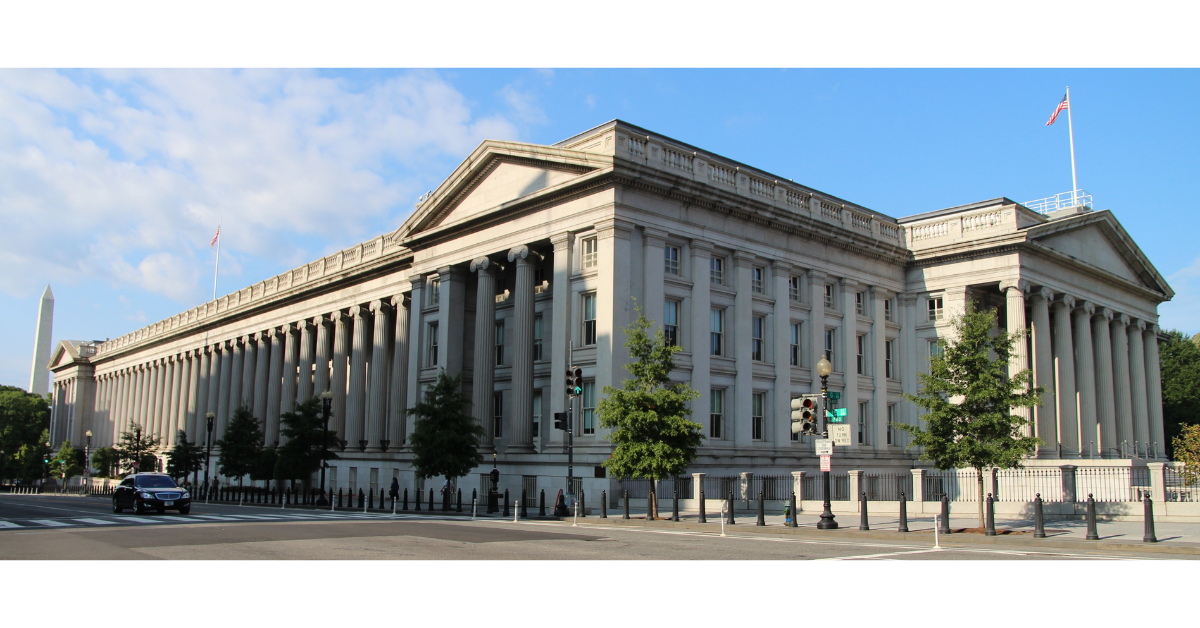
Image: United States Treasury building, Wikimedia Commons used under Creative Commons Attribution Share Agreement.
Will families be able to use scholarship dollars from the new federal scholarship tax credit passed this summer to pay for their children to attend...
Microschool families in many states that have opted in will have an opportunity to receive scholarship that can go toward paying their tuition when a...
The FRIAR of Microschooling