2 min read

Microschools and the New Federal Tax Credit Scholarship Explained

Microschools and the New Federal Tax Credit Scholarship Explained

Microschool families in many states that have opted in will have an opportunity to receive scholarship that can go toward paying their tuition when a much -anticipated federal tax credit scholarship program taxes effect early next year. But for others, especially for certain types of microschools in states with unclear or very narrow legislative language, eligibility for their families to participate remains uncertain, and in some cases in doubt.

The program, which became law last July as part of the “One Big, Beautiful Bill Act,” allows federal taxpayers to claim a nonrefundable federal tax credit for cash contributions to approved state nonprofit organiations providing scholarships for elementary and secondary education expenses. The credit allowed to any individual taxpayer is limited to $1,700, and the Internal Revenue Service will announce in December what the limit for those married filing jointly.

The law’s allowable uses for the scholarships include, “Certain expenses incurred at, required by, or provided by a public, private, or religious school.” Today’s microschooling movement is comprised of microschools organized in lots of different ways, based upon what makes the most sense under their particular states’ laws and frameworks, and many are not set up as private schools.

In a briefing last week, Deputy Assistant Treasury Secretary Kevin Salinger confirmed that he expects the rules to be issued in December will define school,“to include public, private, and religious schools providing K-12 elementary or secondary education as determined under state law. Accordingly, a home school would be treated as a school if it is treated as a school under state law.”

Microschools operating as private schools in the 27 states which have opted into the program, listed here, Should look to connect with scholarship granting organizations (SGOs) in their state to build relationships and encourage scholarships – or some are exploring starting their own that could prioritize microschool families.

Analysis by the Home School Legal Defense Association indicates 22 states whose laws legally classify home education as a private or religious school.

The governors of states opting in will have certain authority to interpret the federal program according to their interpretation of their state’s code, and it is possible that some will seek to add restrictions, which may potentially block certain types of microschools in their state.

Some areas of concern for potential exclusion could include Florida microschools which do not operate as private schools, Ohio nonreligious microschools not approved as “chartered nonpublic schools,” or nonreligious Tennessee microschools which do not satisfy the complex requirements for the law’s categories of private schools.

I explain in this article some of the common reasons microchools opt not to register with their states to operate as private schools, and instead choose to operate as learning centers serving families who adhere to their state's homeschool requirements. Some states have highly regulated private schools and among the reasons microschools are so popular with families are the flexibilities important to providing innovative, responsive and often highly personalized educational models often not possible in larger, traditional school models.

The National Microschooling Center continues to be involved in the rulemaking process, working to support policies most inclusive for different kinds of microschools. For microschool leaders seeking more information, help or questions, contact info@microschoolingcenter.org.

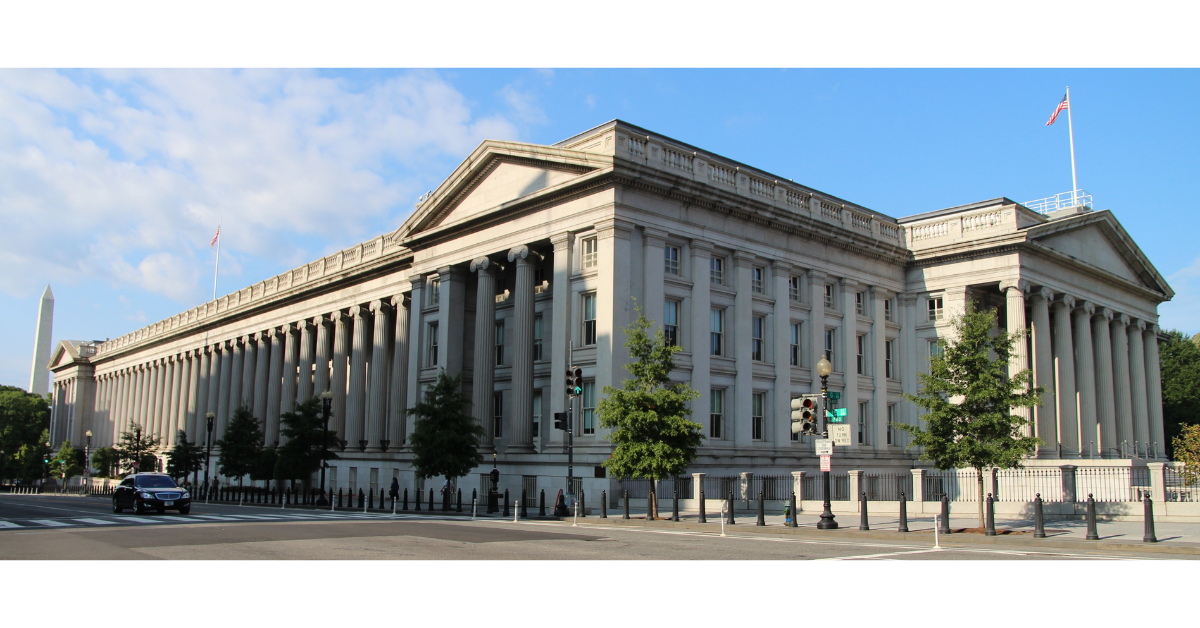
Image: United States Treasury building, Wikimedia Commons used under Creative Commons Attribution Share Agreement.

School Choice is Shallow Choice When Microschools are Left Out of the Plan

School Choice is Shallow Choice When Microschools are Left Out of the Plan

Educational freedom continues to make major gains around the United States. Yet families, even those in many of the states where school choice...
Read More
5 Predictions for the Microschool Movement for 2025

5 Predictions for the Microschool Movement for 2025

Can the nation’s nontraditional microschooling movement keep up the steady growth that has characterized its past four years in 2025? Yes. From the...

Read More
Public Comment on Microschool Eligibility for Federal Scholarship Tax Credit Program

Public Comment on Microschool Eligibility for Federal Scholarship Tax Credit Program

The following is public comment submitted by the National Microschooling Center regarding microschools and their eligibility for federal tax credit...

Read More