Microschools: Environments Where All Learners Can Thrive
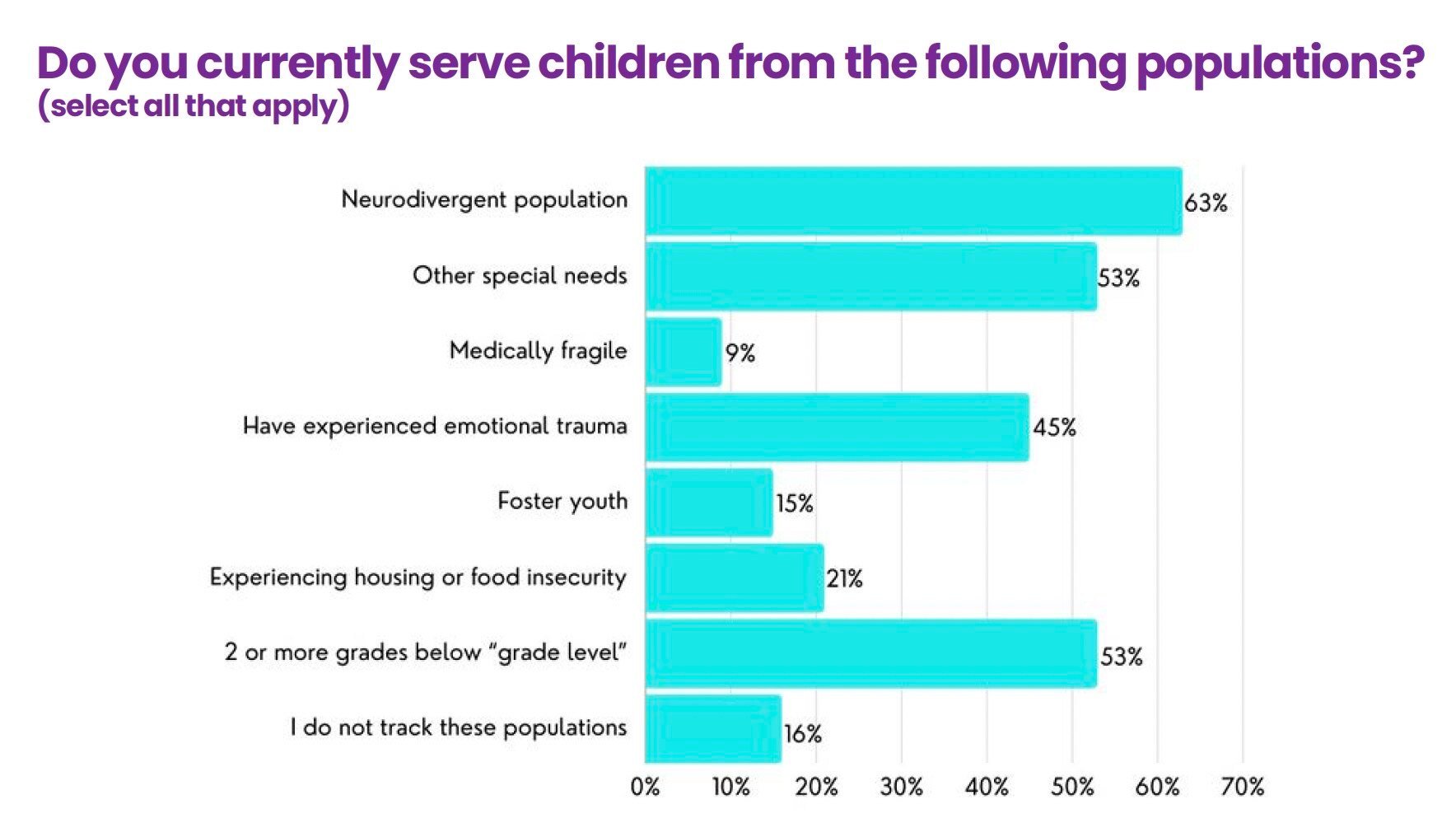
Neurodiverse children, and others whose learning is impacted by diverse levels of ability, are thriving in microschools in ways many never did in...
3 min read
Kait Feriante : Jul 28, 2026, 2:23:20 PM
This one is for the microschool founders tackling literacy.
Running a microschool is hard work. It is also, for a dyslexic child, one of the best places to land. Your numbers are small enough that you see a whole child instead of a data point, and you can change pacing, grouping, or tools tomorrow without waiting on a committee. Mixed ages mean a struggling reader isn't quietly ranked against thirty grade-level peers every day. That flexibility is exactly what dyslexia asks for, and most school buildings can't offer it.
If you run a microschool, the odds are good that one of the children in your care is dyslexic, whether or not anyone has named it yet.
Dyslexia is an unexpected difficulty learning to read and write. Unexpected, because there's often a striking disconnect between how bright a child clearly is and how much they struggle with independent literacy. There is nothing wrong with a dyslexic brain. But a learning environment that runs on reading and writing, day after day, can make a brilliant kid feel slow or "bad at school," and that's a heavy thing to carry.
Here's what I want you to know: learning to read and write confidently changes a life. It's how we access the language that drives so much of the opportunity in this country. It expands thinking, sharpens communication and social skills, and is the gateway to choice, to finding your own unique pathway to success. Any individual with dyslexia can learn to read and write confidently with the right instruction. So why wouldn't we do everything we can to get them that access?
To be clear: no two dyslexic children are the same, and no single approach works for every child. Think of your pediatrician, a generalist watching over overall wellbeing, a lot like a microschool founder. When something gets flagged, they refer you to a specialist. Dyslexia specialists are highly trained and rely on ongoing professional development to stay current with the research, because as we know better, we do better.
Here are five steps to take, starting today.
1. Read up on the six traits that set dyslexic kids up to thrive. Start with this Redwood Literacy post on six success "tricks." Across a 20-year study, researchers at the Frostig Center found six non-academic traits mattered most for long-term success. They're easy to weave into whatever program you already run, take minimal prep, and can be reinforced all year. Every small dose of explicit instruction makes a difference.
2. Brain dump for 15 minutes. Set a timer and write down everything you've noticed about this child. Strengths? Skill gaps? How do they feel about learning? What lights them up? What's getting in their way? Does dyslexia run in their family, or has the family talked about it? When the timer goes off, stop. Snap a photo if you wrote by hand, save a copy if you typed.
3. Get a specialist's eyes on it. Book a short call with a dyslexia specialist. We offer free 15-minute ones at Redwood, but any qualified specialist works. Pick a time that fits your week, paste in your notes (or that photo) so they can review beforehand, and open with your two goals: "I want to leave with the language to raise my concerns with the family, and one low-lift, high-impact strategy I can try with this child tomorrow."
4. Loop in the family. Using the language from your call, email or call the family, sharing your questions and inviting them to partner with you in understanding this child.
5. Try a strategy, then track it. Here's one you can start tomorrow, for free: get this child reading rigorous text at their cognitive level, not their decoding level, through audiobooks. Nurture it, incentivize it, and push toward whole books. Start with one they choose completely (tied to whatever they already love), then let them pick from three high-interest titles their peers are reading, then move to an assigned classic. Bookshare is a free resource; Learning Ally is a paid option if a family wants human-narrated voices. Background knowledge is like Velcro for the brain (see Natalie Wexler's The Knowledge Gap), and rich text builds deep vocabulary (Beck, McKeown, and Kucan's Bringing Words to Life). Keep simple notes on what's working and what isn't.
Worked through all five and want to know what's next? Email me at kait@redwoodliteracy.com. I was homeschooled growing up, I'm a microschool founder and a dyslexia specialist, and I'm a mom of three, one of whom is dyslexic. I'd love to chat.
Kait Feriante is CoFounder & CEO, Redwood Literacy
Neurodiverse children, and others whose learning is impacted by diverse levels of ability, are thriving in microschools in ways many never did in...
Kids representing a broad range of special populations have a strong presence in today’s microschooling movement. Children with neurodiversities,...
Julie Wootton-Greener, Las Vegas Review-Journal