2 min read

Characteristics of Microschool Student Populations

Characteristics of Microschool Student Populations

Today’s highly diversified microschooling movement can be seen growing and evolving in response to educational needs and interests within the communities founders live and work in. And who are the children whose families are choosing microschools?

For readers whose knowledge of microschools comes primarily from reading about them in The New York Times, Washington Post, or the San Francisco Chronicle, the truth is likely to be crowded out by fanciful images of wealthy families dispensing privilege to their children sequestered in exclusive enclaves.

The reality of who today’s microschools are serving is actually quite a different story.

Microschools continue to serve children representing populations frequently described as "at risk" educationally, and at relatively high rates compared with other school options.

Nationally, 3 out of 5 microschools receive their operating revenue primarily from tuition-based funding from families. As state school choice programs that allow families to use program funding for microschools have expanded, the sector has responded to this demand, so that last year 2 out of 5 microschools received tuition funding in this way.

Most state school choice funding follows eligibility requirements or priorities for children from lower-income households. This has generally supported equitable access to attend microschools. Last year, 2 out of 5 microschools reported the average income level of their children’s families to be “below the average income for their area,” which likely reflects limited satisfaction levels with how they feel their children are being prepared for future success. In contrast, just 1 in 9 microschools report serving families whose household income levels are about average for the areas they operate in.

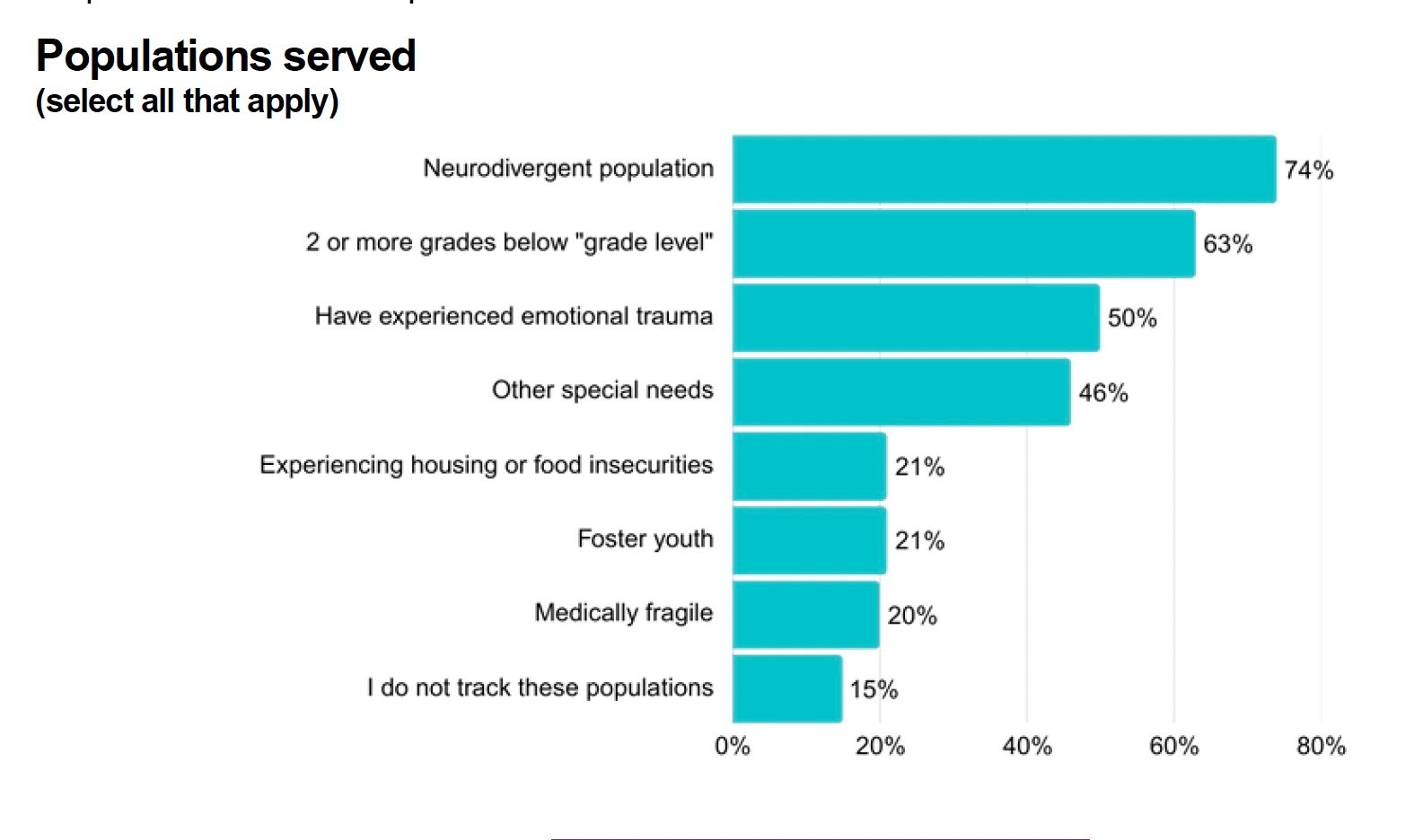
Microschools have also proven popular with families of children with special needs. In fact, 74 percent of microschools reported including children with neurodiversities in their student populations. Additionally, half of microschools surveyed (50 percent) indicated they serve children who have experienced emotional trauma, and 46 percent have "other special needs.”

More than 3 out of 5 microschools reported serving children whose academic attainment is at two or more grades below "grade level" proficiency as defined by their state (63 percent). Half of microschools serve children who have experienced emotional trauma. More than 20 percent of microschools serve children involved with the foster system, and another 20 percent “are experiencing housing or food insecurities.”

Characteristics like these form a more real picture of the students and families served by today’s microschools. In fact, several of the factors referenced here were cited in a recent report from the National Association of Independent Schools which concluded, “Typical microschool demographics are also different from those at most independent schools.”

Certainly, many microschool families can and do feel privileged to be a part of these innovative small learning environments where their children can feel seen, and heard, as they rarely have in larger, traditional school settings. Families choose microschools for many different reasons. That they feel like relevant, valued solutions to the challenge of best preparing their children for success in today’s economy seems a lot more universal when considering who comprises this growing movement.

Microschools: Environments Where All Learners Can Thrive

Microschools: Environments Where All Learners Can Thrive

Neurodiverse children, and others whose learning is impacted by diverse levels of ability, are thriving in microschools in ways many never did in...
Read More
Steps Learning Center: Celebrating Individuality in Orlando

Steps Learning Center: Celebrating Individuality in Orlando

My name is Alexandra Batista I am the founder of Steps Learning Center LLC, born and raised in Puerto Rico. I graduated with a double Bachelors...

Read More
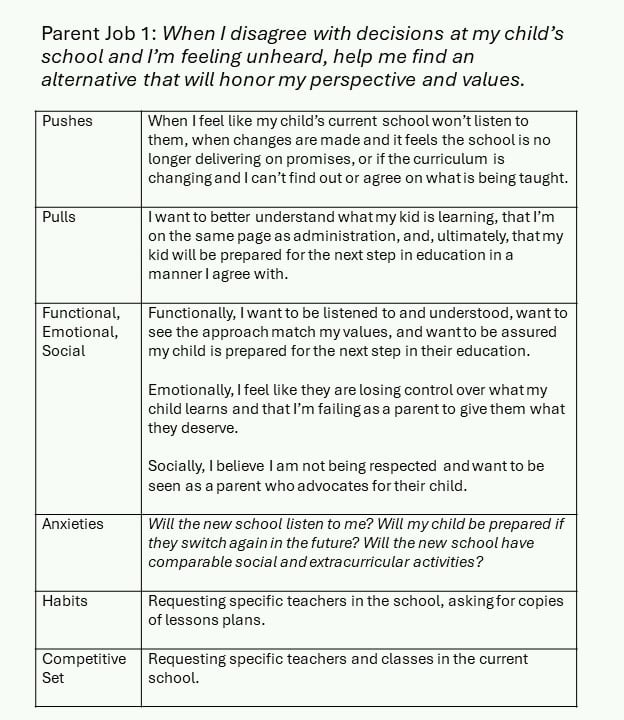
Microschooling's

Microschooling's "Jobs to Be Done"

A new report by longtime innovative schooling enthusiast Thomas Arnett of the Clayton Christensen Institute offers an analysis of extensive...

Read More