 Ashley Soifer
An Early Look At Microschooling In America (From Forbes)
This article appeared in Forbes, where it can be found in its entirety.
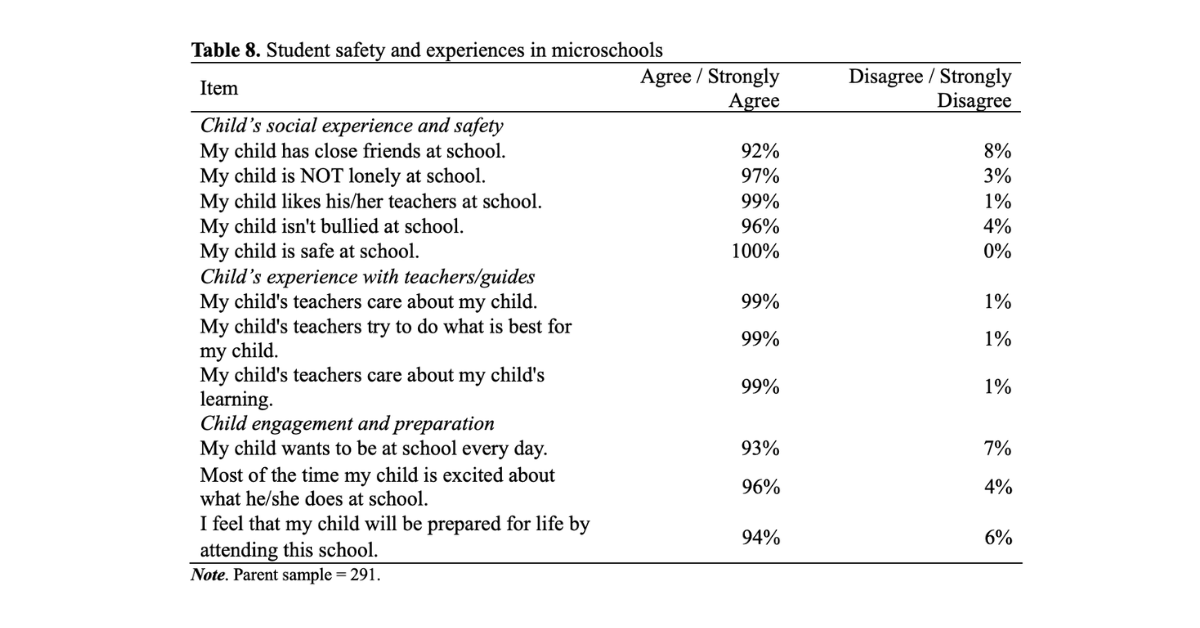
In the latest National Microschooling Center research publication, Measuring the Microschool Experience: A National Analysis of Student Experiences, Family Perspectives and Learning Outcomes, by Daniel Hamlin, researchers focused on three key areas: social capital, cultural capital and human capital. The study included opt-in forms of measurement, including a parent survey. The parent/caregiver survey contains results from 291 respondents with children attending 36 microschools across the United States. This survey was administered in spring of 2026. Their responses offer a picture of a schooling experience that is characterized by strong relationships, trust and active learning.
There’s something powerful that happens when a child is excited to go to school. When a child chooses to go to school every day, and is excited about what they’re doing, a shift occurs for the whole family. Not only does it relieve a level of stress for the family, when there is enthusiasm for the learning happening, it offers the family an opportunity to see how the child experiences the hours they spend away from home.
93% of respondents reported that their child wants to be at school every day. 96% of parent/caregiver responders reported that most of the time their child is excited about what they do at school.
 Feeling Known, Cared For, and Connected
How a child experiences school is shaped by their everyday interactions. These interactions include things like having a friend to sit with, being known by their peers, and building relationships with their teachers. Parents tell us microschools are excelling at these experiences.
99% of respondents in the parent/caregiver survey reported that their child’s teacher cares about their child. 97% report that their child is not lonely at school and 92% report that their child has close friends at school.
When asked about her teachers, a 14-year-old microschooling student whose parent participated in the study said, “They know me. They know what my struggles are, what I like and don’t like, and applied it to my education. And they told jokes that were funny to me. I know that they will be a part of my life even after I am no longer at the school.”
The relationships happening at microschools aren’t just between learners and educators. Families are building real relationships with each other and with the educators at their child’s microschool.
100% of respondents reported that they are treated with respect by their child's teachers. 93% reported that they are involved in decisions about their child's education. For many parents, this is the first time that their child’s school has welcomed them to be an active participant in their child’s education.
.png?width=699&height=366&name=Table%207.%20Home-school%20family%20engagement%20(%25).png)
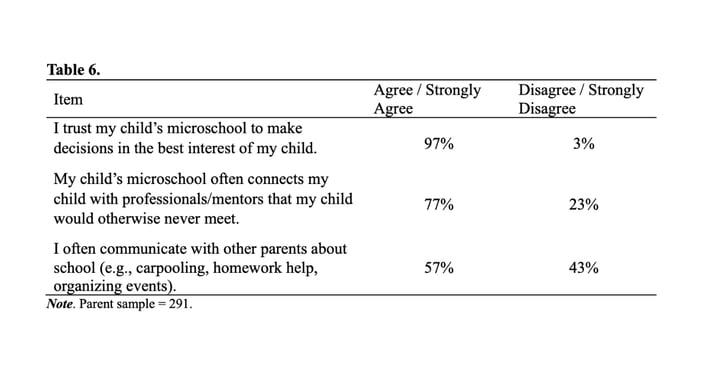
97% of respondents reported that they trust their child’s microschool to make decisions in the best interest of their child.
In a September 2024 EdChoice/Morning Consult survey, when 1,278 parents of children currently in K-12 education were surveyed, 88% reported trusting teachers to make good decisions about education, 82% reported trusting school principals and 68% reported trusting school boards.
Parents who have children in microschools place a much higher level of trust in their child’s microschool. Microschool founders and educators facilitate trusting environments with the whole family, where they are welcomed and can participate.
 Opportunities to Lead, Collaborate and Contribute
The National Microschooling Center works with over 2,000 microschools across the country and one thing that always stands out is the variety of experiences that microschools offer their learners.
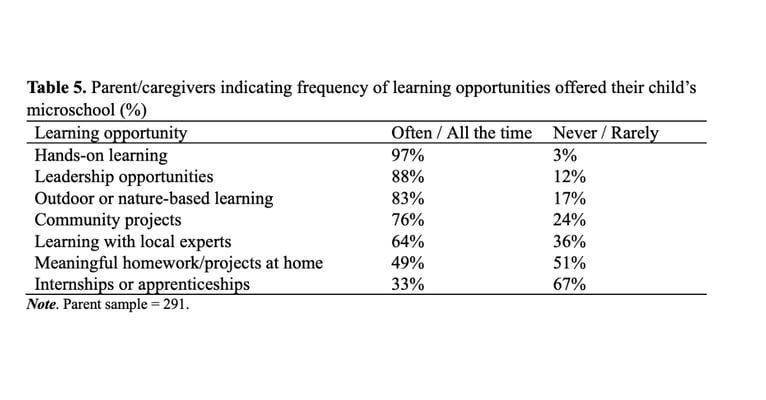
In the parent/caregiver survey, 97% of respondents reported that their child has hands-on learning opportunities often or all of the time. 88% report frequent leadership opportunities and 76% report frequent community projects.
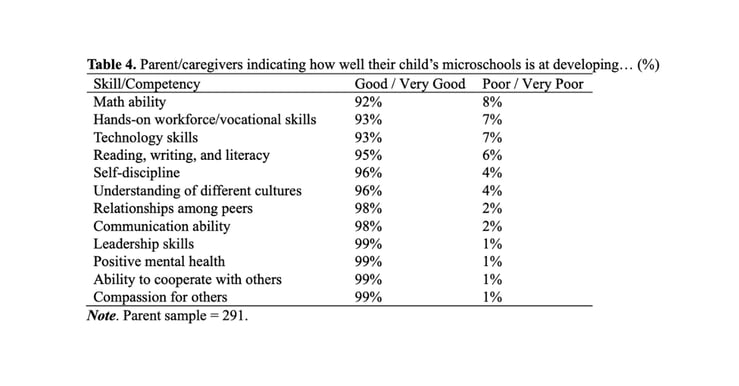
These opportunities connect to how well the parent feels the microschool is at developing their child. 99% of respondents tell us that their child’s microschool is good or very good at developing leadership skills. 99% also report that their child’s microschool is good or very good at developing their child’s mental health and 96% report that their child’s microschool is good or very good at developing their child’s self-discipline.
The response to the parent/caregiver survey was overwhelmingly positive. There is however room to grow in a few areas, namely ways to connect with community partners.
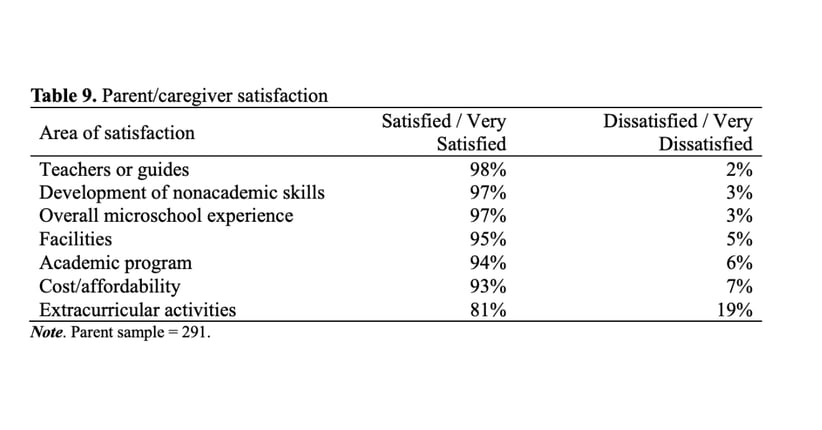
36% of respondents reported that learning with local experts rarely or never happens. And though still a positive response, 81% are satisfied or very satisfied with extracurricular activities. Because microschools operate on a much smaller budget, many of these opportunities occur in partnership with their community. Organizations such as museums, art studios, and local businesses can play a large role in contributing to the experience a child has at a microschool.
 What should we pay attention to?
These findings provide clear insight into how families feel about their child’s microschool and educational experience.
Microschools are places where children want to be, where families feel welcome and where they place their trust.
Read the full report by Daniel Hamlin here: Measuring the Microschool Experience: A National Analysis of Student Experiences, Family Perspectives and Learning Outcomes.

This article appeared in Forbes, where it can be found in its entirety.
 Ashley Soifer : Aug 2, 2025, 4:38:48 PM

 News Story Posted by Center Staff : Jan 7, 2026, 11:42:40 PM
Download this new White Paper here.