Microschooling Moments: A more personal journey
Welcome to the first post in our new series, Microschooling Moments.
Strong readers are not created by chance. They are developed through intentional, research-based instruction that builds essential literacy skills step by step.
Decades of research in cognitive psychology, linguistics, and neuroscience have given educators a clear understanding of how children learn to read. Known as the Science of Reading, this body of evidence outlines the skills students must master and how to teach them effectively.
Microschools, with their small size and flexible design, are uniquely positioned to turn this research into daily practice. By combining personalized instruction with structured literacy, microschools naturally offer environments where strong readers thrive.
The Science of Reading identifies five essential components of skilled reading:
When these components are taught explicitly and systematically, students build a solid literacy foundation. This structured approach benefits all learners and is especially critical for students with reading difficulties, including dyslexia.
Microschools excel at delivering this type of instruction because their structure supports responsiveness and consistency.
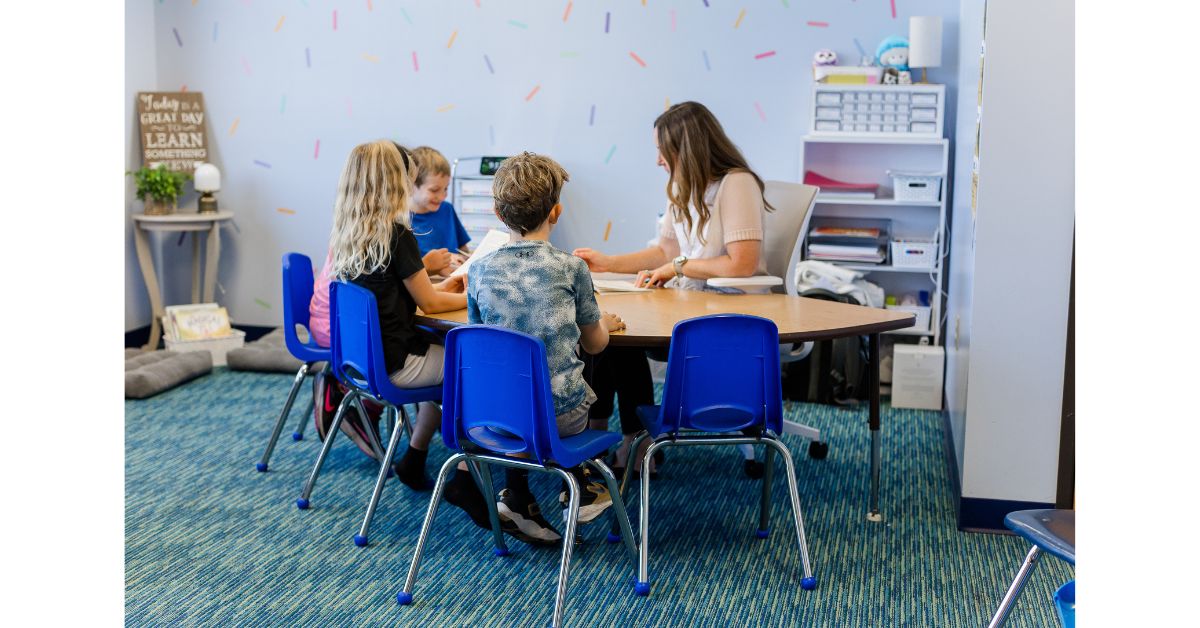
One of the most powerful ways microschools can build strong readers is through small class sizes.
With a smaller student to teacher ratio, teachers can quickly identify skill gaps and provide targeted instruction. A student struggling with decoding can receive immediate support. Another who reads fluently can be challenged with deeper comprehension work.
Struggling readers receive timely intervention before gaps widen, while advanced readers continue progressing. No student is overlooked.
Strong readers develop at different rates. Microschools recognize this and design instruction accordingly.
Ongoing assessments help teachers pinpoint each student’s strengths and needs. Instruction is then adjusted. For example, students who need support in phonemic awareness and phonics receive focused practice in these skills. Students mastering phonics move toward fluency and vocabulary development. Students ready for complex texts engage in deeper comprehension and analysis.
The flexibility of the microschool can ensure mastery of foundational skills before moving forward and aligns directly with the science of reading.
Microschools often have the flexibility to make independent curriculum decisions, allowing them to select research-based structured literacy programs that best meet their students’ needs. Because they are not bound by lengthy district adoption cycles, microschools can implement new materials quickly when gaps are identified. This responsiveness ensures that students gain timely access to resources and instruction that directly support their learning and growth.
By grounding instruction in research and student needs rather than trends, microschools can meet students exactly where they are and move them forward with purpose and precision.
Many microschools use multi-age classrooms, which naturally support reading development.
Older students mentor younger peers during reading practice, reinforcing their own fluency and comprehension. Younger students benefit from modeling and encouragement.
Students also progress based on mastery rather than rigid grade level expectations. This reduces pressure and ensures a strong foundation before advancing.
Microschools offer the ideal ecosystem for building strong readers by combining research-based instruction with personalized learning environments.
This powerful blend offers the best of both structure and flexibility. Students are taught at their individual levels, their specific needs are addressed with intention, and they learn in small, nurturing settings that foster confidence and independence. Over time, students not only strengthen their reading skills but also develop a sense of ownership and autonomy in their learning.
In microschools, literacy success is not accidental. It is carefully built, one skill, one student, and one strong reader at a time.
Welcome to the first post in our new series, Microschooling Moments.
In recent years, microschools have gained traction as a viable alternative to the traditional K-12 educational model. These small, often personalized...
In Central Florida, Start Bright Learning Center serves students in kindergarten through 5th grade. Centered in a belief that children learn “in...