School Choice and Microschools
 Darla Baquedano : Jan 25, 2026, 8:11:12 PM
What Are Empowerment Scholarships and How Can They Help You Choose Your Child’s Education, Including Microschools?
5 min read
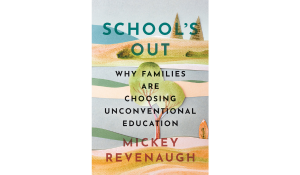
Microschools by their very nature embody the “let a thousand flowers bloom” phase of education innovation, as I discovered in researching School’s Out: Why Families Are Choosing Unconventional Education (Johns Hopkins University Press). Like charter schools in the early 1990s and virtual schools a decade later, new and different forms seem to pop up every day, thrumming with the passion of teacher-founders and the militant gratitude of parents who feel they have finally found the one place their child might thrive.
What’s different about microschools is that their essential smallness runs counter to the notion of scale, a holy grail in certain education innovation circles. Whether scale is measured by social impact (such as the percentage of student population engaged or the correlated movement in quantitative outcomes, including college attainment and future salaries) or economic efficiency (bringing the unit cost of service down by serving more units), or both, these tiny, variegated learning communities are flies in the ointment.
Pessimists say it’s just a matter of time before only the most widget-like, franchised microschools are left, differing from one another just by location. Optimists suggest the future of microschools is less McDonalds and more food truck—each one prized for its uniqueness, and each sustained by obeying the unforgiving but crystal-clear economics of very small business. While many microschool founders are driven by a desire to serve marginalized populations and seek philanthropic funding to defray the cost to parents, “if your microschool budget works with 12 students but you only have 11, you have a problem,” KaiPod founder Amar Kumar told those assembled at the Harvard Emerging Schools conference in 2024. “Our schools are uniquely demand-sensitive.” There’s pressure from parents to keep costs low, and pressure from supporters for sustainability.
Leaders in the microschool movement find that banding together, through networks and convenings, can accrue some of the pragmatic advantages of scale without abandoning the “small is beautiful” ethos. Marketplaces of microschools in states like Arizona and Florida encourage parents to shop around using online search-and-match processes, a bit like Airbnb for education. Sector-wide advocates help founders navigate regulations and parents access available funding. The Yass Prize brings promising applicants together in an incubator/accelerator program to share best practices, while VELA is experimenting with a founder crowd-sourced approach to grant-making. The National Microschooling Center has engaged Darla Baquedano to help microschool founders to connect with enabling partners like Goodwill, which supports her Spark@one·n·ten microschool for LGBTQ+ learners as a fiscal agent and national thought partner in designing microschool experiences for other vulnerable populations.
 The twin questions of funding and accountability are particularly germane to the discussions about microschooling. Almost all 21st-century microschools operate on a parent-pay basis; some that are organized as parent co-ops work off sweat equity, but most others charge from a few hundred dollars for a course to multiple thousands of dollars a year for full-time enrollment. Microschool leaders point out that their tuition price tag is still much lower than that of other private schools and is dwarfed by the per-pupil funding of local public schools. But still, it’s not zero, the sum most parents in America pay for their child’s education at the public school down the street. ESAs in states like Florida, Arizona, and an increasing number of others provide one source of funding for microschool tuition, and the recently passed Federal Tax Credit Scholarship program may help as well. But those funds don’t always cover either the full price of tuition or the complete cost of serving a child. And in most states still, ESAs are not an option: Out-of-pocket means just that.
Nonetheless, the movement continues to grow. The microschool momentum is especially apparent in states like Arizona, which school choice observers joke has a microschool, like a 7-–Eleven11, on every corner. As I discovered in my research for SCHOOL’S OUT, the plethora of options for families in Arizona is indeed impressive.
There are half a dozen KaiPod “company schools,” like the flagship in a Gilbert shopping plaza where the kids’ sundial project—--paper plates lined up on the front sidewalk with straws all indicating 1 p.m. in the unforgiving Arizona sun—--set this storefront apart from the nail salon, the fitness studio, and the Iraqi café. Meanwhile, KaiPod’s Catalyst program incubates scores of other uniquely branded Arizona microschools like Desert Sun Ranch and Moreana Boys Academy.
Then there’s the Prenda microschool universe, launched in 2018 by Mesa native Kelly Smith to chart the microschool path for others following in Arizona and beyond. (The network’s name is a mash-up of Spanish words for “learning” and “ignite,” plus Portuguese for “gift,” according to the Prenda website.) Inspired by his own experiences running an after-school coding club, Smith invited neighborhood families to gather their kids around his kitchen table for a different approach to school. After a few evolutions, Prenda now has over more than 100-plus outposts across the state and more beyond. All of the Prenda microschools serve students in grades K–-8, with some variation to include pre-K, and are led by specially trained “guides,” many of them moms who operate school in their homes, often with their own kids as students. These include a handful of Prenda OGs, guides who have been running their microschools since Prenda’s launch.
One of the arguments against this proliferation of microschools is also the argument for it: that for all intents and purposes, anyone can start one. Those who prize parental freedom and the power of the market to weed out sub-par choices believe microschooling should be essentially “permissionless.” Other than basic fire safety and criminal background checks, these advocates say, microschools should be able to operate without a red-tape- heavy process around physical location, personnel, or curriculum. (Finding themselves subject to local ordinances meant for day care centers is enough to make most microschool founders weep.) And parents should be able to choose such schools without getting the okay from anyone at their school district or state. On the other hand, folks who are already a bit squeamish about certain states’ light-touch homeschooling requirements -- “unregulated” is the term you hear in these circles -- are even more worried about this approach for microschooling. “[A]mbiguity surrounding the definition of microschools and the regulations that govern them has raised questions about their need to comply with standard education regulations,” the Center for American Progress argues in its February 2025 broadside, “The Importance of Holding Microschools Accountable.”
So in exchange for the public funding streams provided by ESAs and similar mechanisms, many microschool advocates readily embrace accountability for outcomes. (Microschool parents may beg to differ—--a zesty debate about the strings attached to public funding that originated in the homeschooling world has now found resonance among those considering taking advantage of ESAs.) KaiPod, Prenda, Black Mothers Forum, Science Prep Academy, and others in Arizona conduct norm-referenced testing, with parent permission, to chart student growth. Schools like these concede that their small sample sizes and ease of testing opt- out make it difficult to compare with regular public schools. Nonetheless, the individual attention and instruction focused on specific learning gaps available in microschools seem to add up for many students, with Prenda reporting 35 percent greater growth in math and language arts than similar students in traditional schools, and Science Prep Academy documenting two years of growth in one year for many of its students.
Results like these may help quiet larger questions among policy-makers about microschool effectiveness while providing additional comfort for parents whose instincts drive them toward this more- personalized-yet-social education option for their kids. Will microschools at some point be within reach of every family who might want one?
KaiPod’s Amar Kumar thinks so. “I predict that within a decade most public school districts will have microschools in their portfolios,” he says. “That may sound crazy, but I wouldn’t bet against parents who see their kids learning and happy at school for the first time. There’s a unique power in that.”
Mickey Revenaugh is an education journalist and cofounder of Connections Academy whose new book, School’s Out: Why Families Are Choosing Unconventional Education, is forthcoming in August 2026 from Johns Hopkins University Press.
.png)
Darla Baquedano : Jan 25, 2026, 8:11:12 PM
What Are Empowerment Scholarships and How Can They Help You Choose Your Child’s Education, Including Microschools?
.jpg)
 News Story Posted by Center Staff : Dec 13, 2022, 12:14:11 PM
.png)
 Don Soifer : Oct 19, 2022, 2:41:05 PM
Our CEO Don Soifer's featured presentation at the Harvard University Kennedy School of Government's "Charting New Terrain: A Conference on Emerging...