Microschools' Diversity: Part 2, Schedules & Facilities
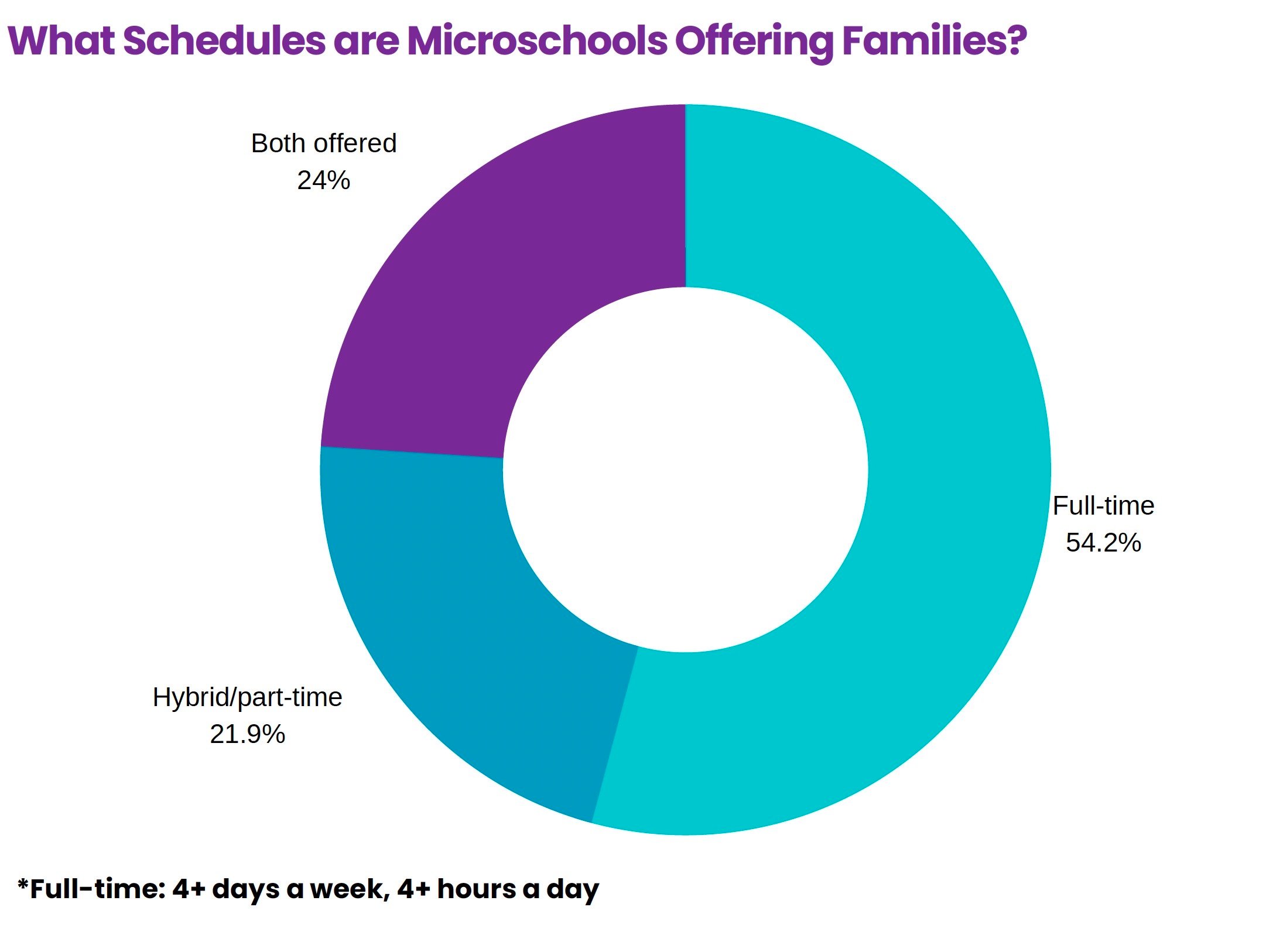
The profound diversity of America's microschooling sector is found across many aspects and dimensions of the work they do to support their learners...
3 min read
Tiffany Blassingame & Erin Flynn, Field Coordinators : Mar 24, 2026 2:48:49 PM
I (Tiffany Blassingame) recently attended a literacy festival in Atlanta. A library system booth caught my eye—it was staffed not just by librarians, but by licensed social workers. I wondered if public libraries could become the backbone of Georgia’s growing microschool movement.
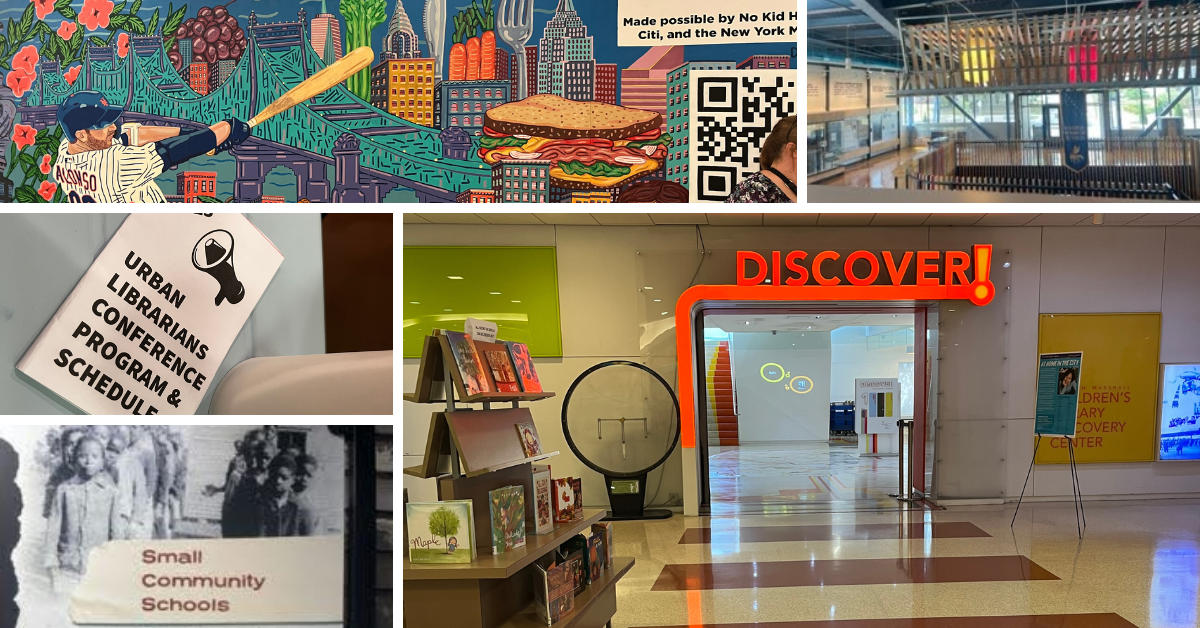
Not long after that, I found myself in conversation with Erin Flynn, an educator and fellow Center Field Coordinator, who had just returned, buzzing with ideas, from a library conference in New York City.
The following thoughts are from our wide-ranging discussion.
"Libraries are community hubs—they already have the infrastructure, the relationships, and the mission that microschools are trying to build." — Erin Flynn
Many microschool founders are wrestling with the same core challenge: how do you provide students with enriching, hands-on experiences when you're working with a small team and a lean budget? Erin's answer is deceptively simple — walk through the library's front door.
Modern public libraries are far more than book repositories. Most educators walk past an entire ecosystem of free resources without realizing what's available. Need printing, computers, or digital tools? Libraries offer them at little or no cost. Looking for hands-on science programming? Many branches host makerspaces and science stations built for exactly that kind of exploration. Need a space to hold a small class, workshop, or seminar? Bookable collaboration rooms are often just a phone call away.
Beyond the physical infrastructure, libraries frequently offer life skills programming — resume writing, financial literacy, job readiness — that can support the families surrounding a microschool, not just its students. And in some branches, social workers are embedded on site, providing the kind of wraparound support that few microschools could ever access on their own.
Libraries are also deeply invested in expanding their community reach. A microschool brings exactly the kind of engaged, mission-driven partnership that many branches are actively seeking. The relationship benefits both sides from day one.
Moving from theory to practice, we generated a cascade of real, actionable ideas.
The lowest-barrier starting point is the field trip. Scheduling recurring visits — for a maker space session, a science station, or a storytelling hour — this builds familiarity and lays the groundwork for deeper collaboration. Erin also proposed a multi-school open house hosted at a library, where several microschools in a region showcase their work together. The effort is shared; the community visibility is multiplied.
One idea that generated particular excitement: hosting student exhibitions and science fairs in library spaces. Many branches already have gallery-style wall space and a history of displaying community artwork. Portfolio nights at the library accomplish several things at once — they give students a professional venue, invite parents into a comfortable and neutral setting, and position the microschool as a serious institution woven into community life.
For schools with a project-based or interdisciplinary focus, Erin pointed to a standout example from her New York conference: a library that partnered with teenagers to produce a blog and podcast series. Students gained real media production skills, the library gained fresh content and young voices, and both gained a creative bond that lasted. A library-hosted podcast on local history, a student-run community newsletter, a digital archive of neighborhood stories — all of it is within reach, and all of it is deeply educational.
Libraries don’t just have to be a stop along the way, they can be the home base. Across the country, we see the potential for libraries to house microschools, offering consistent space, access to resources, and a built-in connection to the broader community. For libraries looking to deepen their impact, partnership microschooling is a natural next step and one that aligns seamlessly with the mission to expand access to learning. If you’re a library curious about what this could look like in your community, whether it’s hosting, collaborating, or simply exploring possibilities, we invite you to reach out to the National Microschooling Center. We’re here to help connect you with microschools and co-create partnerships that feel right for your space, your community, and your vision.
None of this happens without a relationship, and Erin is direct about how to build one. Skip the email. Walk into the branch and introduce yourself — the human connection made at the front desk is where it all begins. Ask to speak with the head librarian or community liaison, the decision-makers who can open doors that a front-desk volunteer cannot. Do your homework first: most library systems publish staff directories online, and knowing names signals professionalism before you even sit down.
Come with a clear, low-lift ask — a meeting room booking, a field trip slot — and then ask what the library is currently working on. Partnerships grow when both sides see the benefit. Follow up with a one-on-one conversation, not a group email. Deeper engagement is built in individual meetings, not inboxes.
Microschools don't have to build every resource from scratch. The public library system — underfunded, underutilized, and deeply committed to education — is a ready-made partner hiding in plain sight. Libraries and microschools share a common mission: both exist to democratize learning and to ensure that every person in a community has access to knowledge, connection, and opportunity.
As Tiffany put it: "Don't wait for the perfect moment or the perfect program. Walk in. Ask a question. See what happens. The library is already on your side."
When these two institutions work together, the whole community is stronger for it.
This article includes AI-assisted content that has been reviewed by the blog authors.
The profound diversity of America's microschooling sector is found across many aspects and dimensions of the work they do to support their learners...
For decades, families in rural America have faced a persistent challenge: limited educational options. Small and nimble, microschools, have emerged...